The Fastest Way to Learn a Language (It's Not What You Think)
Everyone wants the fastest way to learn a language. And yes, your method matters. Techniques like spaced repetition, active recall, and personalised vocabulary genuinely speed up how quickly knowledge sticks. Tapping through generic exercises on a gamified app is measurably slower than drilling sentences you'll actually use in conversation.
But here's what most apps don't talk about: even with the best method in the world, the biggest variable is simply how many hours you put in. The US Foreign Service Institute estimates that reaching conversational proficiency in Spanish takes roughly 600 hours. For German, about 750. For Mandarin or Arabic, 2,200+.
A better method can absolutely make each of those hours more effective. But nothing replaces the hours themselves.
The actual fastest way to learn a language is to combine a great method with a way to put in more hours per week, without it taking over your life.
Most people have 1-3 hours of unused time every single day. They just can't use it for studying. Until now.
The Real Bottleneck Isn't Your Brain
Think about how most language apps work. You sit down, open your phone, stare at a screen, and tap things for 15 to 30 minutes. Maybe you match pictures to words. Maybe you fill in blanks. Then you close the app and get on with your day.
That's 15 to 30 minutes. In a good week, you might manage that five times. That's about 2 hours of study per week. At that rate, reaching conversational Spanish takes almost six years.
The problem isn't that you're lazy or unmotivated. The problem is that screen-based study requires your full visual attention, both hands, and a quiet environment. Most adults simply don't have much of that time left after work, commuting, cooking, errands, exercise, and everything else.
But here's what's interesting: most people have a huge amount of time where their hands and eyes are busy, but their brain is free.
Dead Time Is Everywhere
Think about your average day. How much time do you spend doing things that keep your body occupied but don't require much mental effort?
- Commuting (driving, cycling, walking, public transport)
- Cooking, washing up, cleaning the kitchen
- Doing laundry, ironing, tidying up
- Walking the dog
- Exercising (gym, running, swimming)
- Grocery shopping
- Gardening, DIY, routine manual work
For most people, that adds up to at least one to two hours a day. For some, it's significantly more.
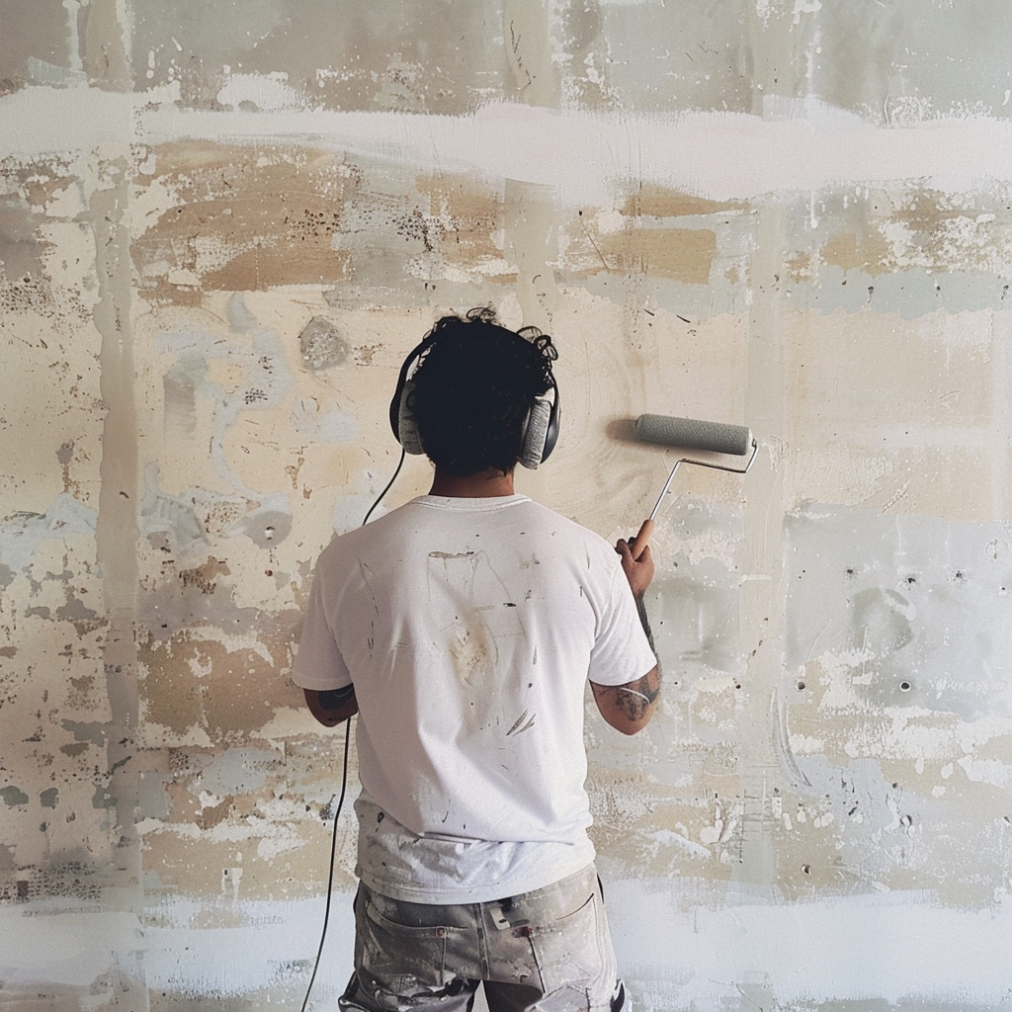
Think about a long-haul truck driver, a warehouse worker, a postal worker, a cleaner, or a stay-at-home parent. In all of these roles, people spend hours every day with their hands and eyes fully occupied, but their brains are completely free. If they tried to use a traditional screen-based app, it would be impossible, and in many cases, dangerous. Normally, all of this is just dead time.
Unless you can study using only your ears and your voice.
How Auracle Turns Dead Time Into Study Time
Auracle is a voice-first study app. You don't look at it, you don't tap it, you don't type into it. You listen and speak. That's it.
Put your headphones in, press play, and Auracle starts asking you questions in your target language. You answer out loud. If you get it right, it moves on. If you don't know the answer, say "pass please" and Auracle teaches it to you, then tests you on it again immediately so it sticks.
The entire experience is designed to work while you're doing something else. Driving to work. Walking the dog. Folding laundry. Cooking dinner. You can even drift in and out of focus: if you zone out for a bit or need to concentrate on something (checking a recipe, navigating a junction), Auracle just waits. When you zone back in, it picks up right where you left off. No penalty, no lost progress.
The maths is simple:
Screen app: 20 minutes/day × 5 days/week = 1.7 hours/week
Auracle during daily activities: 45 minutes/day × 7 days/week = 5.25 hours/week
That's 3x the study time with zero extra effort. At that rate, conversational Spanish goes from six years to under two.
Why Active Speaking Beats Passive Listening
You might be thinking: "I could just listen to a podcast in my target language while I do chores." And you can. But passive listening builds comprehension slowly and does almost nothing for your ability to speak.
Auracle uses active recall: you have to retrieve the answer from memory and say it out loud. This is the same cognitive process as being in a real conversation, and it's the single most effective technique for building spoken fluency. You're not just hearing words. You're training your brain and mouth to produce them under pressure.
Combined with automatic spaced repetition (Auracle schedules your reviews so you revisit words just before you'd forget them), every minute of study time is optimised. You're not wasting time on stuff you already know. You're not forgetting stuff you learned last month. The system handles all of that.
Learn What You Actually Need to Say
There's a concept in language learning called "Language Islands", popularised by Mikel Telleria (Mikel Hyperpolyglot). The idea is simple: instead of learning generic textbook vocabulary, you focus on the exact sentences you'll actually use in your real life. Your job, your hobbies, your family, your daily routine.
Auracle makes this incredibly easy. You can describe what you want to learn in plain English and the AI generates a full study deck instantly. Or, if you've already written your sentences out, upload them as a CSV and Auracle handles the translation, audio, and scheduling.
Want to learn how to talk about your job as a plumber in Portuguese? Or how to order food with specific dietary requirements in Japanese? Or how to discuss your kids' school schedule in French? Type it in and you'll have a hands-free audio study deck in seconds.
Structured Courses Too
If you want a more traditional, guided path, Auracle also has structured courses that take you from complete beginner to conversational, following a CEFR progression. They're all audio-first and fully hands-free, just like custom decks.
Complete A1-B2 course. Study while commuting, cooking, or exercising.
Complete A1-B2 course. Fully hands-free, voice-interactive study sessions.
Complete A1-B2 course. Learn during your daily routine with active recall.
Complete A1-B2 course. No screen required, just headphones and your voice.
We recommend combining both approaches: structured courses for grammar and core vocabulary, and custom Language Island decks for the personalised phrases that make you actually conversational in the situations that matter to you.
Stop Looking for a Shortcut. Start Looking for More Hours.
The language learning industry has spent decades marketing shortcuts. "Learn a language in 10 minutes a day." "Become fluent while you sleep." These claims sell apps, but they don't produce fluent speakers.
Fluency takes hundreds of hours of practice. That's just how brains work. The real question isn't "which method is fastest?" It's "where am I going to find hundreds of hours?"
If you're someone who commutes, exercises, cooks, cleans, walks, or does any kind of routine physical work, you already have those hours. You just need a tool that can use them.
Want to see how the method works in practice?
How to Follow Mikel Hyperpolyglot's NLL Method With Auracle →