Auracle
A wide shot photograph of an elderly Chinese scholar, dressed in traditional robes, calmly practicing calligraphy at a wooden desk, with an open window revealing a serene, misty mountain landscape and a winding river. Golden hour light filters into the room, creating a harmonious blend of human wisdom and the effortless flow of nature.
CoursePublicCreated 20/03/2026

The Art of Living: A Practical Guide to the Philosophy of Life

How do you live a good life? What's the point of it all? This course gives you the toolbox of history's greatest thinkers so you can start building your own answers.

Total Decks
16
Course Completion
0%
0/16 Decks
Answer Language
en-GB
Course Completion
0%
0/16 Decks

Decks in this Course

16 items
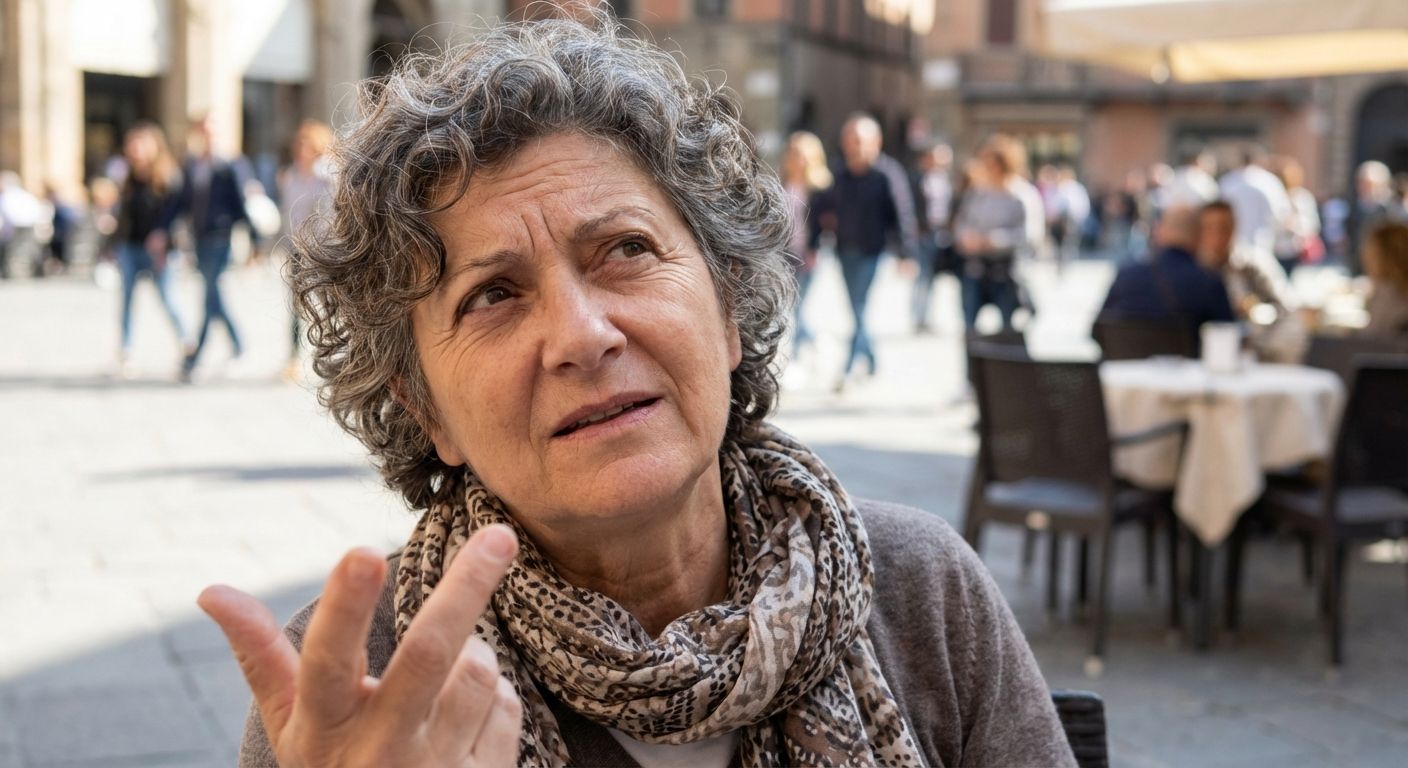
A candid, close-up photograph of an Italian person in a vibrant piazza, mid-conversation, their expressive face conveying a sense of curiosity and a subtle upward glance, capturing the moment of asking a question. Shot with natural light and a shallow depth of field.

The Art of Living: Asking Life's Biggest Questions

Introduces the core questions of the philosophy of life course, defines key terms including philosophy, ethics, and eudaimonia, and sets the stage for a journey through global traditions of wisdom.
StudyStudy From HereDetails
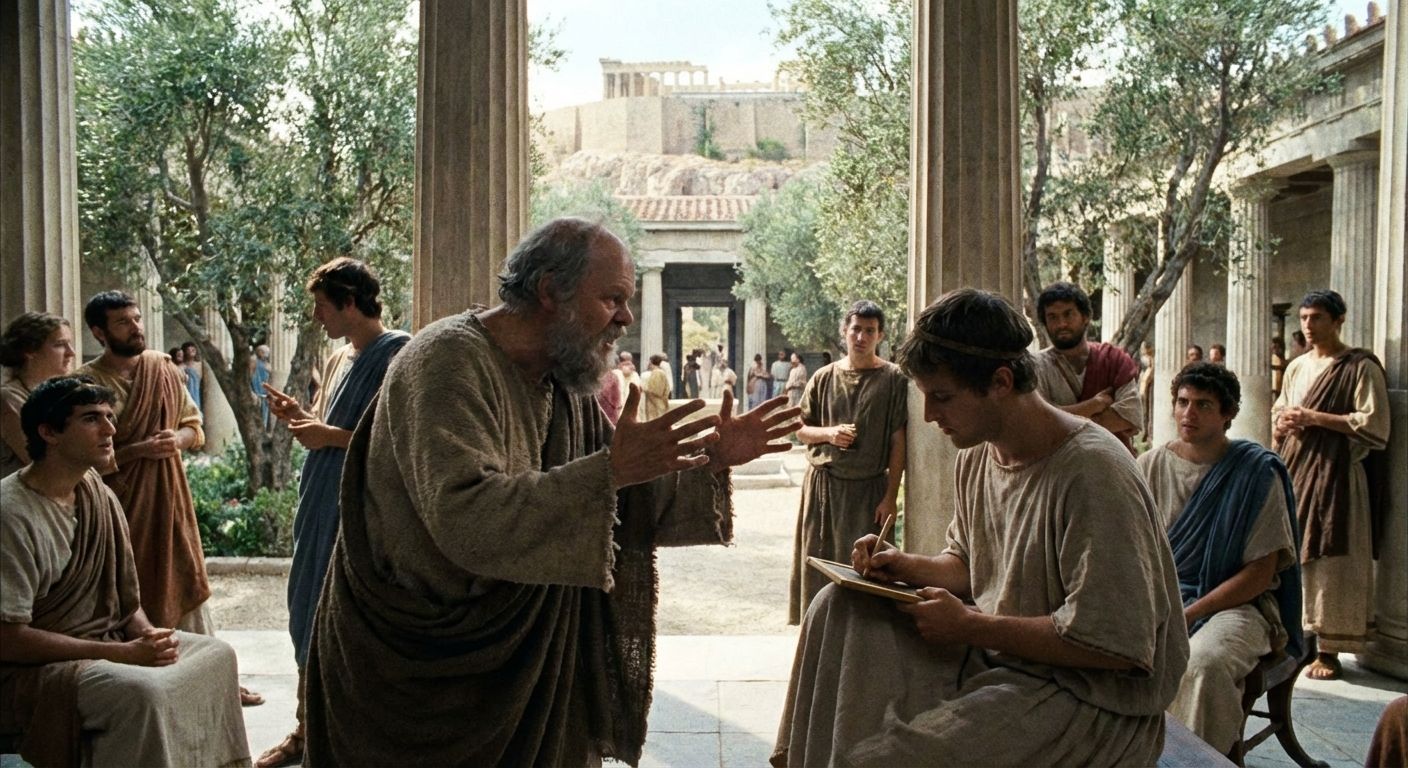
The image depicts a scene reminiscent of ancient Greece, staged in a courtyard setting with classical architecture.  A grey-bearded man, likely a philosopher or teacher, stands at the forefront, animatedly gesturing with his hands while speaking to his followers.  Students in tunics surround him, listening attentively. A young man seated on the right takes notes on a tablet.  

The colors are muted and earthy, with prevalent beiges, browns, and creams in the clothing and architecture. The courtyard is lush with greenery, and in the background, through an archway framed by columns, the Acropolis stands on a hill. The composition is layered, creating depth. The lighting suggests a sunny day, casting shadows within the courtyard. Overall the style has a vintage, possibly cinematic feel.

Ancient Greek Philosophy: Plato's Just Soul and Aristotle's Flourishing Life

An exploration of Plato's tripartite soul and the idea that justice is inner harmony, followed by Aristotle's virtue ethics, the concept of Eudaimonia as human flourishing, and the Doctrine of the Mean as a practical guide to developing good character.
StudyStudy From HereDetails
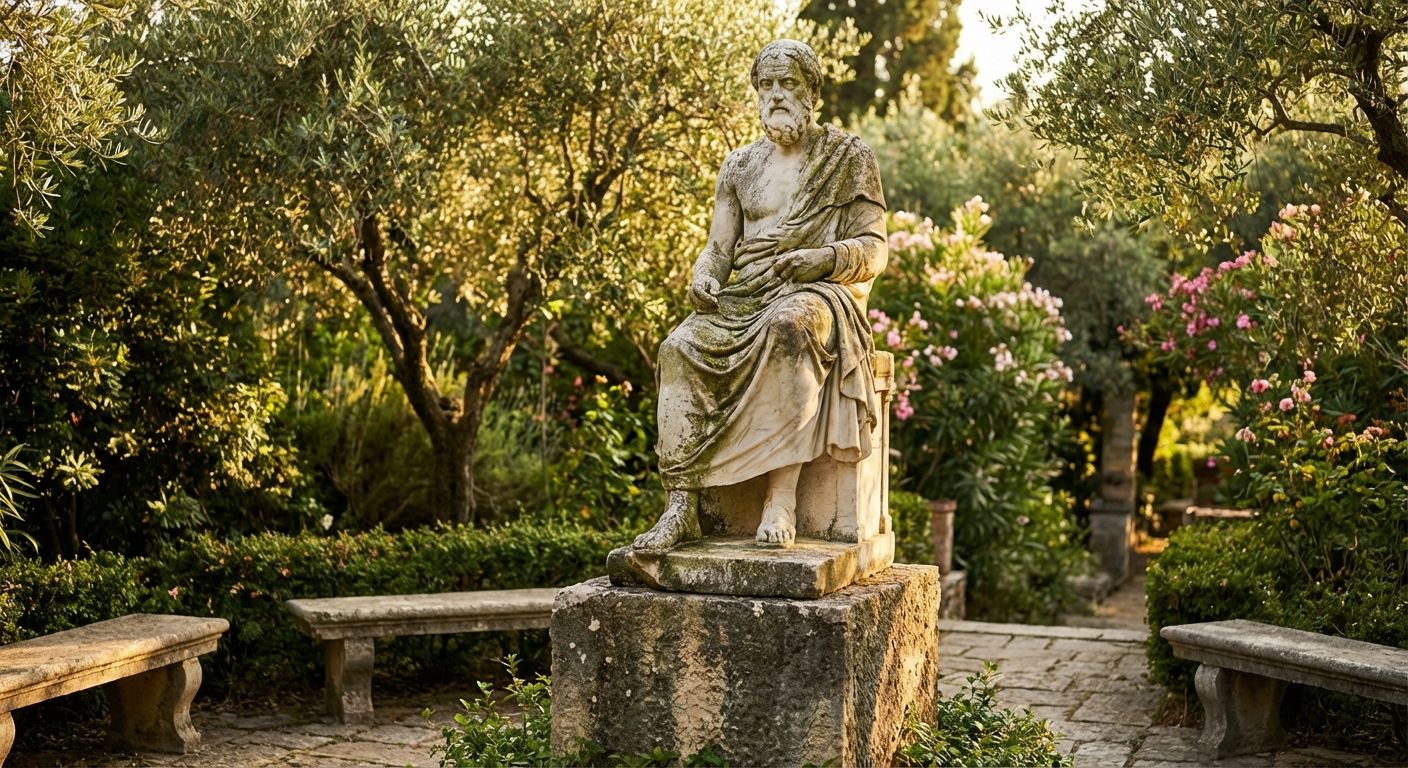
A weathered, ancient Greek statue stands in a serene garden, perfectly balanced on a stone pedestal. Golden sunlight bathes the scene, highlighting the statue's tranquil expression.

Stoicism: Finding Inner Peace with Epictetus, Seneca, and Marcus Aurelius

An in-depth, practical guide to Stoic philosophy. Covers the Dichotomy of Control, virtue as the sole good, key Stoic figures, and practical exercises including premeditatio malorum and the view from above.
StudyStudy From HereDetails
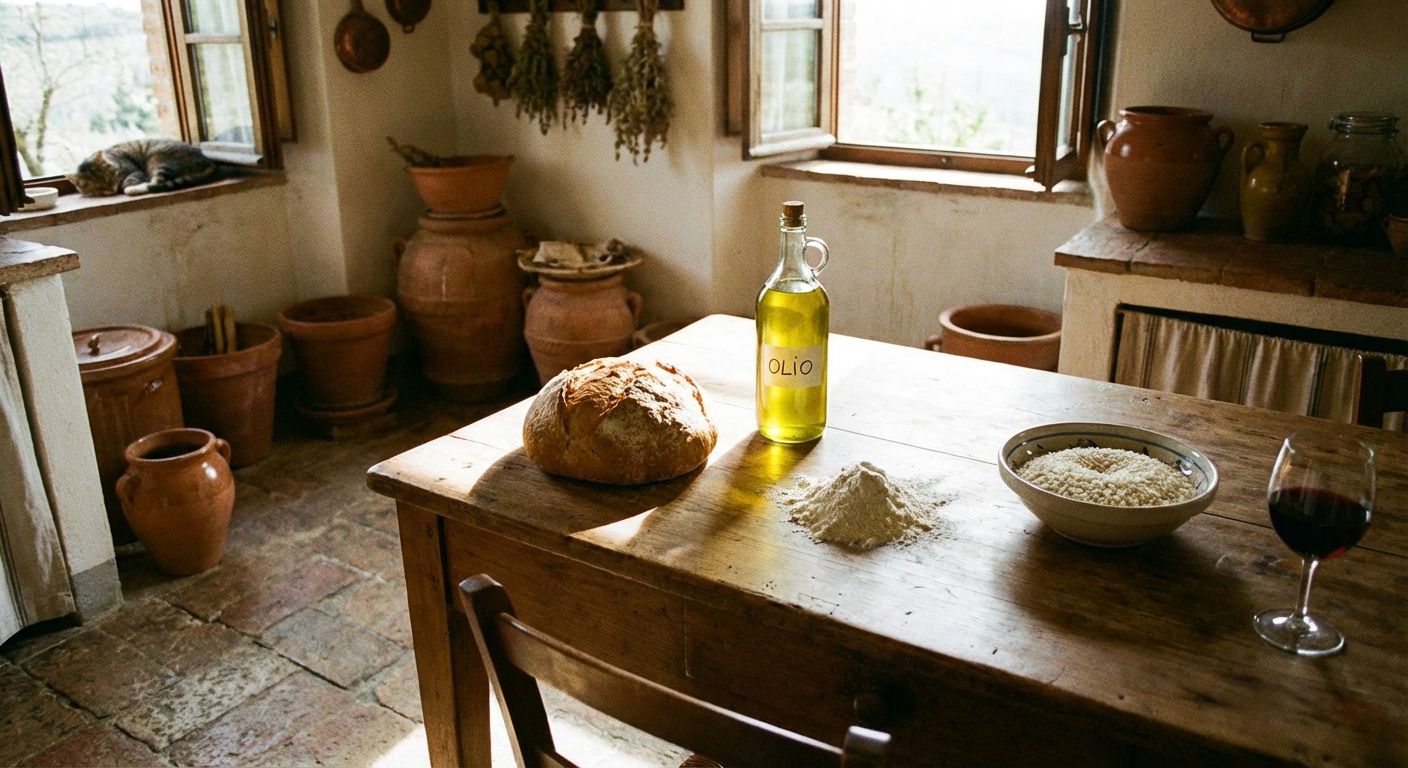
A rustic wooden table in a sunlit Italian kitchen, showcasing a beautiful array of ingredients: a freshly baked loaf of crusty bread, a glass bottle of olive oil, a small pile of flour, a bowl of uncooked rice, and a glass of red wine. The scene, bathed in warm natural light, evokes the simple pleasure of having "some" of each essential component for an Italian meal.

The Art of Living: Epicureanism

An exploration of Epicurean philosophy, covering the distinction between types of desires, the goals of ataraxia and aponia, the importance of friendship, and the Epicurean argument against fearing death.
StudyStudy From HereDetails
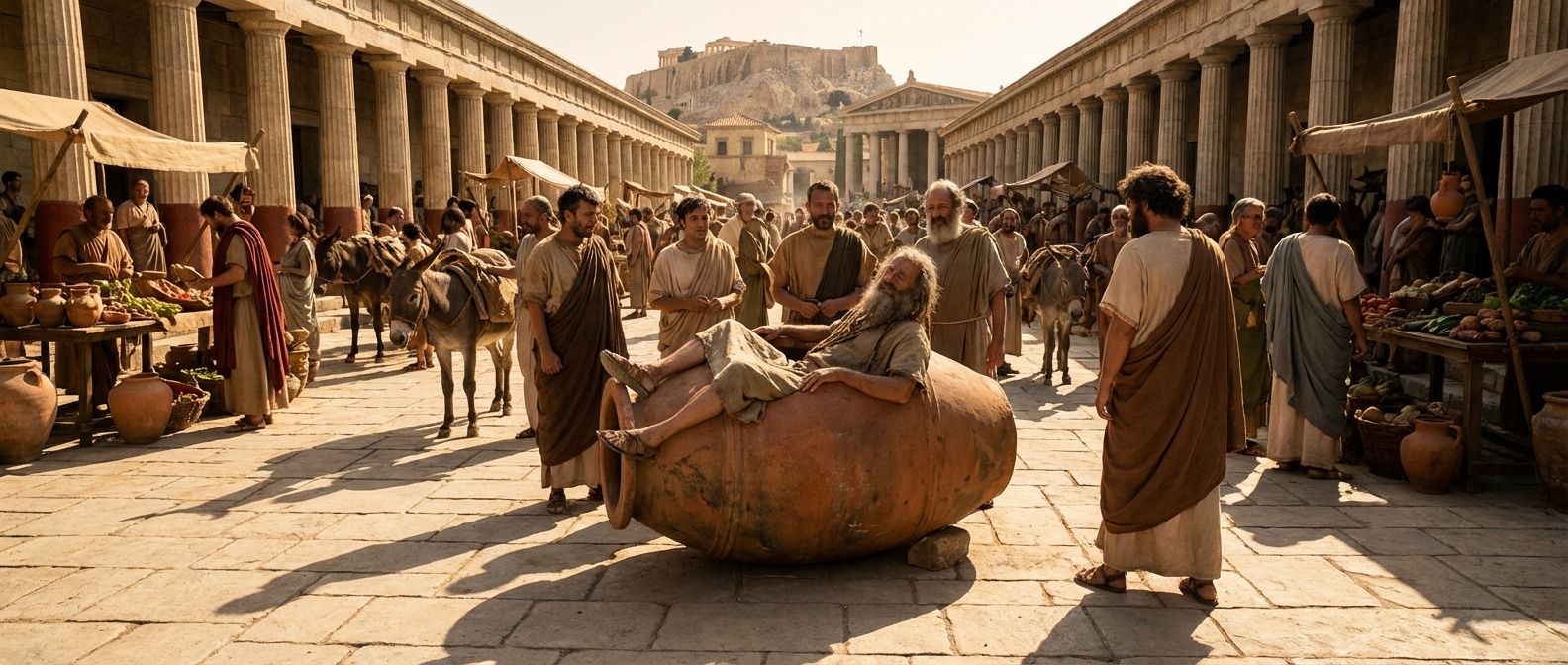
A wide-angle shot of a sun-drenched, ancient Athenian marketplace, where a philosopher resembling Diogenes reclines nonchalantly in a large ceramic jar, seemingly indifferent to the bustling crowd around him. The midday sun casts long shadows, highlighting the philosopher's simple, unadorned existence amidst the ornate architecture and lively commerce, capturing the essence of Cynic detachment from societal norms.

The Art of Living: Cynicism and Diogenes

An introduction to the philosophy of Cynicism through its most famous proponent, Diogenes of Sinope. Covers the core tenets of Cynicism, the concept of living in accordance with nature, and the practice of askesis.

StudyStudy From HereDetails
The image showcases a weathered temple nestled in a misty mountain landscape at dawn or dusk. The temple is constructed from grey stone, and it looks ancient. The architecture is of traditional design, with a central spire. A winding stone path leads up to the temple, bathed in warm light.

Fog fills the valleys, partially obscuring the surrounding mountains. The light filters through the clouds, creating an ethereal glow. Prayer flags adorn the temple grounds. The style is realistic, with a focus on natural lighting and atmospheric perspective. The colors are muted and earthy. The overall mood is peaceful and mystical.

Buddhist Philosophy: Understanding the Four Noble Truths and the Eightfold Path

A practical introduction to the core philosophical teachings of Buddhism, covering the Four Noble Truths, the concepts of Dukkha, Tanha, Anicca, and Anatta, and the Noble Eightfold Path as the practical route to liberation.
StudyStudy From HereDetails
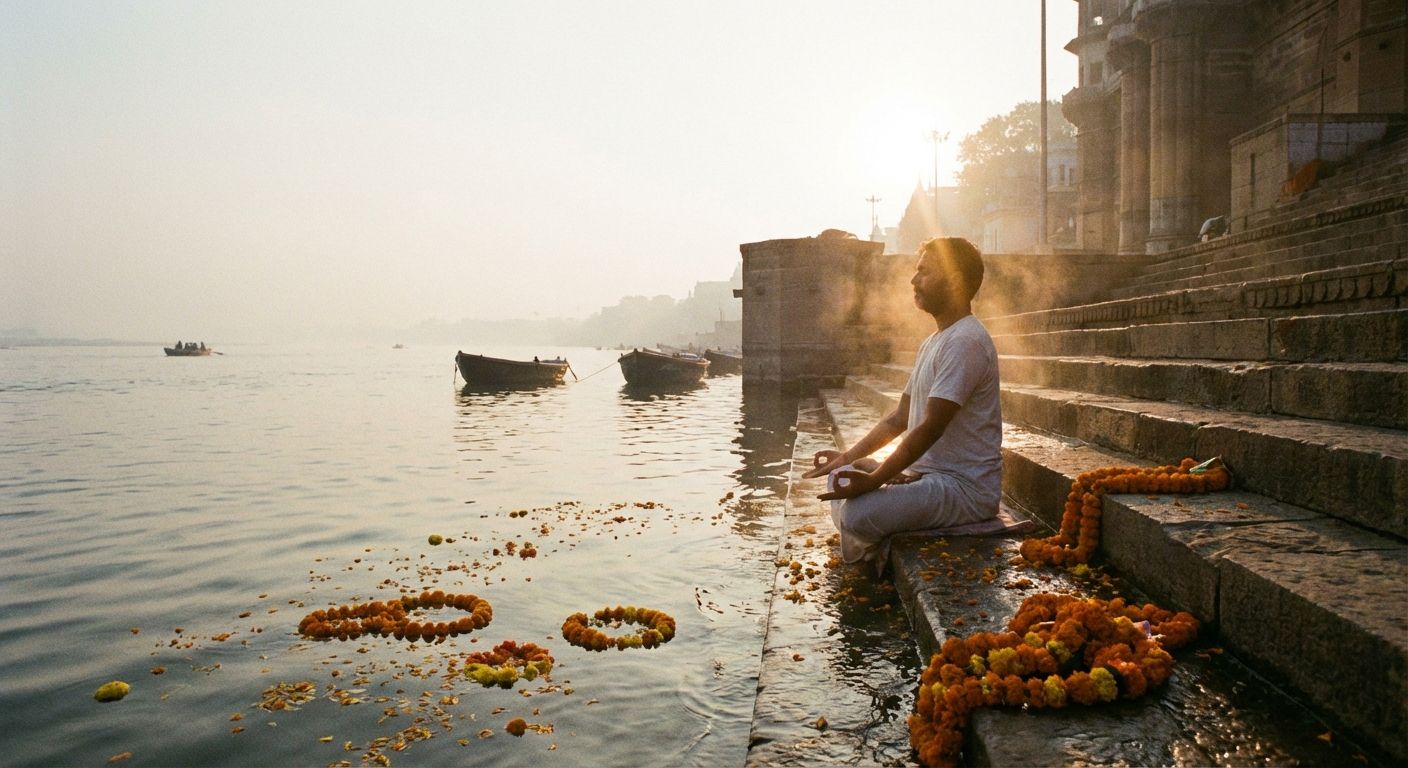
Capture an early morning scene at a ghat, a riverfront staircase. A serene atmosphere is key, with a hazy, golden light diffused across the composition. The foreground features a body of water with flower garlands floating on the surface.

On the right, depict stone steps leading up to a temple-like structure, and a man dressed in white meditating in a lotus position.  The sun is behind the man creating a subtle backlight. Also show some flower garlands on the steps. In the background, show boats on the water.  The overall color palette should be muted with golds, soft blues, and warm grays. Aim for a slightly desaturated, vintage photograph look.

Hindu Philosophy: Living a Good Life Through Dharma, Karma, and Moksha

An exploration of the key ethical and existential concepts from Hindu philosophy relevant to living a good life, covering Dharma, Karma, the four Purusharthas, the four Ashramas, and the ultimate goal of Moksha.
StudyStudy From HereDetails
A wide shot photograph of an elderly Chinese scholar, dressed in traditional robes, calmly practicing calligraphy at a wooden desk, with an open window revealing a serene, misty mountain landscape and a winding river. Golden hour light filters into the room, creating a harmonious blend of human wisdom and the effortless flow of nature.

Chinese Philosophy: Confucian Harmony and Taoist Flow

An introduction to the two most influential philosophies of China: Confucianism, with its focus on social harmony, virtue, and the cultivation of the self; and Taoism, with its emphasis on living in harmony with the natural order through effortless action and simplicity.
StudyStudy From HereDetails
This is a watercolor-style landscape painting. The subject is a simple wooden cross standing tall in a golden wheat field. The cross is centered in the frame. The field extends into the distance, meeting low rolling hills on the horizon. The sky is a soft gradient of blues and golds, mimicking the colors of dawn or dusk. The painting has a gentle, diffused light quality. The brushstrokes are loose and suggest movement in the wheat. The overall tone is peaceful and serene.

The Art of Living: The Good Life in Judaism, Christianity, and Islam

A comparative exploration of the ethical frameworks for a good life within the three Abrahamic faiths. Covers Tikkun Olam in Judaism, Agape love and the Beatitudes in Christianity, and the Five Pillars and Ihsan in Islam, highlighting both shared values and unique contributions.

StudyStudy From HereDetails
A dramatic, cinematic photograph of a hand poised over a large, weathered industrial lever at a railroad switch. In the blurred background, two diverging tracks hint at difficult choices and their far-reaching consequences, bathed in a tense, low-key light.

The Art of Living: Utilitarianism and the Calculation of Happiness

An exploration of Utilitarian ethics, covering Jeremy Bentham's hedonic calculus and principle of utility, John Stuart Mill's distinction between higher and lower pleasures, classic thought experiments, and key critiques of the theory.

StudyStudy From HereDetails
A close-up, dynamic photograph of two expressive hands: one hand gestures forward with an open palm, indicating 'go' or 'do', while the other hand is raised with an open palm, indicating 'stop' or 'don't'. The hands are set against a softly blurred, warm-toned background, hinting at a lively, communicative setting, under natural light.

Kantian Ethics: Duty, Reason, and the Categorical Imperative

An exploration of Immanuel Kant's deontological ethics, covering the good will, the distinction between hypothetical and categorical imperatives, and the two main formulations of the Categorical Imperative: Universal Law and Humanity as an End.

StudyStudy From HereDetails
A stunning landscape photograph featuring a silhouetted figure standing atop a rocky, snow-dusted peak. The composition is dramatic, with the figure facing away from the viewer, looking out towards a vibrant sunset. The sky is filled with swirling clouds painted in hues of orange, pink, and purple. In the lower part of the horizon the sun is shining, creating a breathtaking glow. An eagle soars in the upper-left portion of the frame. The mountains in the background appear in soft layers, adding depth to the scene. The overall tone is one of adventure, freedom, and inspiration.

Nietzsche: The Will to Power, the Übermensch, and Amor Fati

An introduction to Friedrich Nietzsche's most important ideas: his critique of traditional morality through the lens of master and slave morality, the concept of the Will to Power, the ideal of the Übermensch as a creator of meaning, and the life-affirming practice of Amor Fati.
StudyStudy From HereDetails
A lone figure stands pensively at a fork in a winding forest path, one route leading into bright, open sunlight and the other disappearing into deep, misty shadows. The scene is captured as a photograph with soft, diffused light, evoking a sense of past decisions and imagined, alternative futures.

The Art of Living: Existentialism with Sartre, de Beauvoir, and Camus

An exploration of 20th-century existentialism, covering Sartre's existence precedes essence and radical freedom, de Beauvoir's ethics of ambiguity, and Camus's philosophy of the absurd and rebellion.
StudyStudy From HereDetails
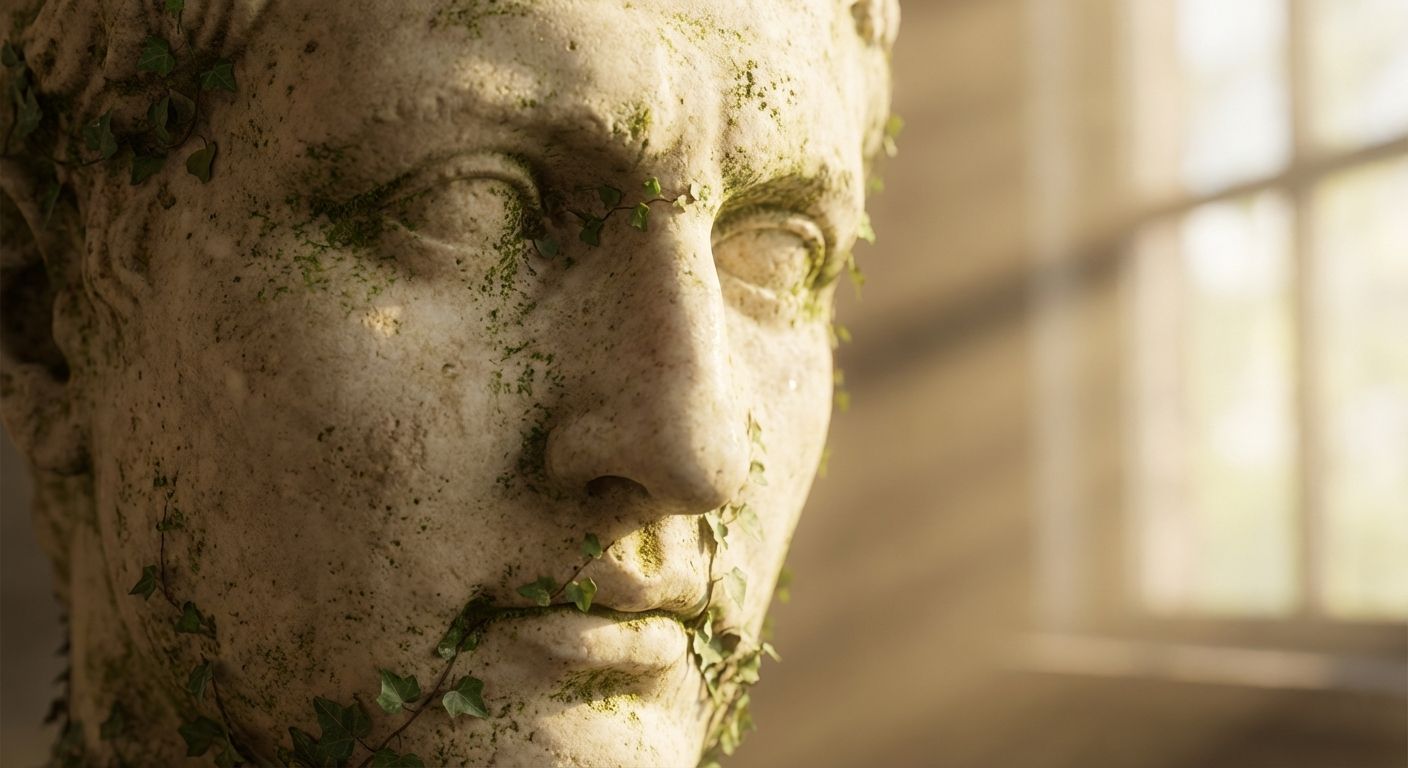
An extreme close-up photograph of a weathered, ancient Roman or Greek marble bust, with delicate green moss and small ivy vines subtly growing on its time-worn features. Ethereal, soft morning light gently illuminates the statue's face, creating a contemplative and serene mood.

Philosophy of Life: How to Think About Death

A comparative exploration of three major philosophical approaches to mortality: Epicurus's argument that death is nothing to us, the Stoic practice of memento mori, and the existentialist claim that awareness of death gives life its meaning.
StudyStudy From HereDetails
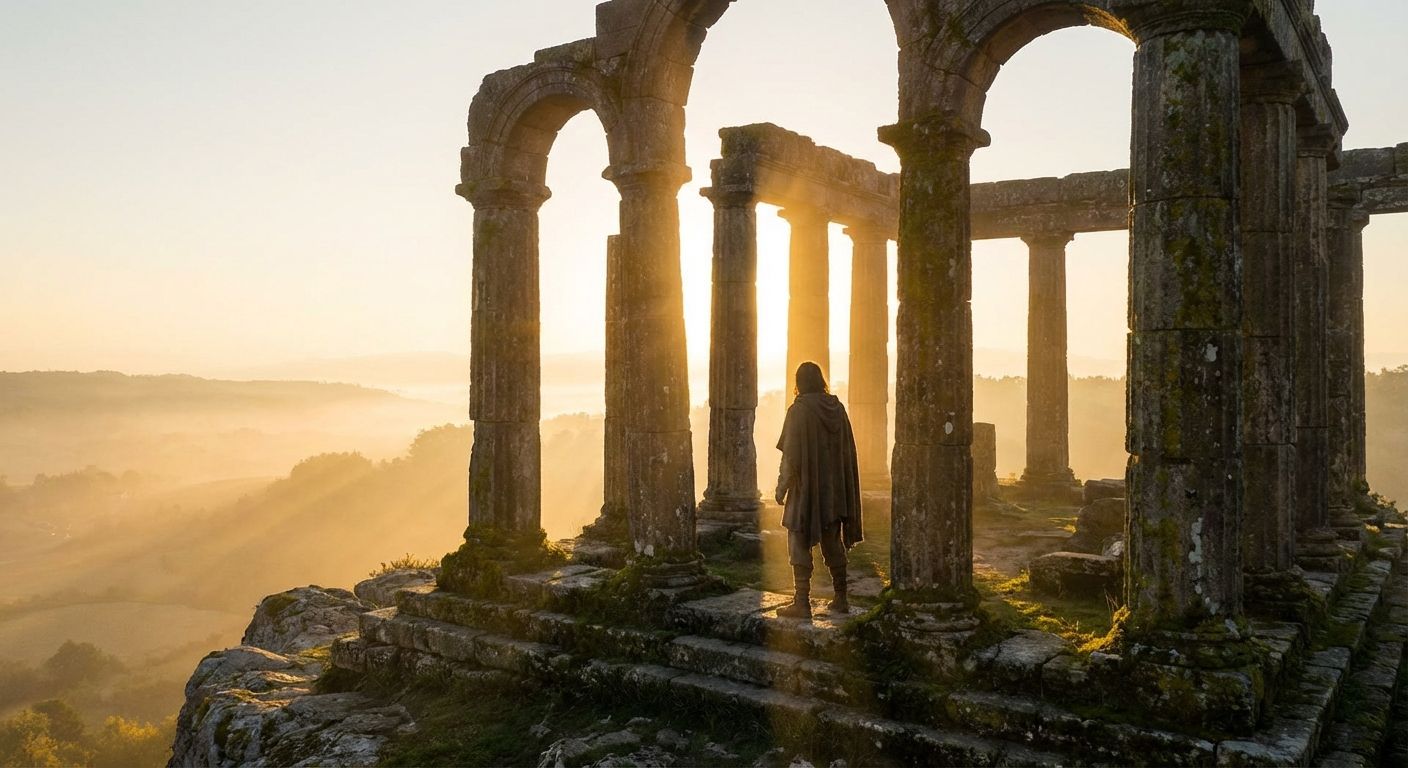
A solitary figure stands amidst the serene, weathered ruins of an ancient Greek temple, gazing out towards a vast, sun-drenched landscape at dawn. The scene is imbued with a sense of profound contemplation and timeless tranquility, capturing the enduring human search for the meaning of a good life.

Philosophy of Life: What is Happiness, Really?

A comparative deep-dive into four major philosophical accounts of happiness: Aristotle's eudaimonia, the Stoic apatheia, the Epicurean ataraxia, and the Utilitarian view of happiness as pleasure. Students will learn to distinguish these accounts, critique simple hedonism, and understand how each definition leads to a different way of living.

StudyStudy From HereDetails
A warm, inviting close-up photograph of two people's hands clasped in a friendly, firm handshake, symbolizing an introduction and the beginning of a connection. The background is a softly blurred, sun-drenched Spanish street or plaza, with warm light and a welcoming atmosphere.

The Art of Living: Forging Your Personal Philosophy

A capstone deck guiding learners to synthesize ideas from across the course, evaluate philosophical traditions critically, identify personal values, and draft a coherent personal philosophy of life.

StudyStudy From HereDetails

Learn The Art of Living: A Practical Guide to the Philosophy of Life differently

Auracle is an audio-first learning platform built for busy people. Memorize anything without looking at a screen.

Hands-Free Learning

Listen, interact, and review cards entirely through audio. Perfect for commuting, walking, or at the gym.

Spaced Repetition

Auracle uses a scientific algorithm to schedule your reviews at the optimal time, ensuring you never forget what you learn.

Learn how it works

Ready to start the The Art of Living: A Practical Guide to the Philosophy of Life audio course?