Auracle
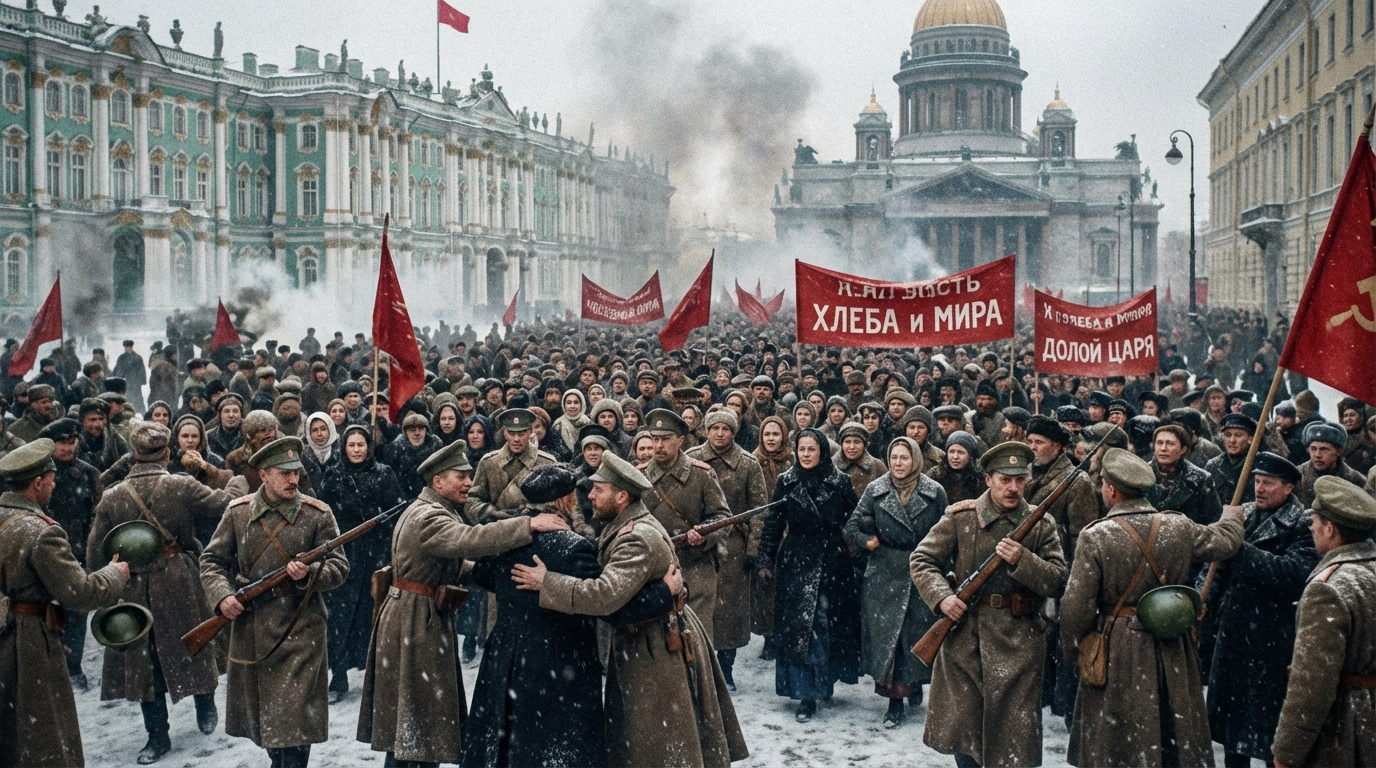
A powerful, wide-angle photograph of a chaotic winter street scene in 1917 Petrograd, Russia. A determined crowd of bundled protestors, including women and workers, surge forward through the snow. In the foreground, Tsarist soldiers are visibly mutinying, lowering their rifles and turning to join the civilian uprising. The grand, imperial architecture of the city's background is partially obscured by the snowy, agitated atmosphere, capturing the dramatic collapse of the old order.
CoursePublicCreated 26/03/2026

GCSE History (Edexcel): Russia and the Soviet Union, 1917–41

All the key dates, names, and events for your Edexcel GCSE History paper on Russia and the Soviet Union, 1917–41, drilled directly into your memory.

Total Decks
4
Course Completion
0%
0/4 Decks
Answer Language
en-GB
Course Completion
0%
0/4 Decks

Decks in this Course

4 items
A powerful, wide-angle photograph of a chaotic winter street scene in 1917 Petrograd, Russia. A determined crowd of bundled protestors, including women and workers, surge forward through the snow. In the foreground, Tsarist soldiers are visibly mutinying, lowering their rifles and turning to join the civilian uprising. The grand, imperial architecture of the city's background is partially obscured by the snowy, agitated atmosphere, capturing the dramatic collapse of the old order.

GCSE History: The revolutions of 1917

This deck covers the causes, events, and consequences of the 1917 revolutions in Russia. It examines the long-term discontent and the impact of the First World War leading to the February Revolution and the Tsar's abdication. It then explores the failures of the Provisional Government, including the problems of 'Dual Control' and the Kornilov Revolt, before covering the Bolsheviks' rise to power, culminating in the October Revolution, focusing on the roles of Lenin and Trotsky.
StudyStudy From HereDetails
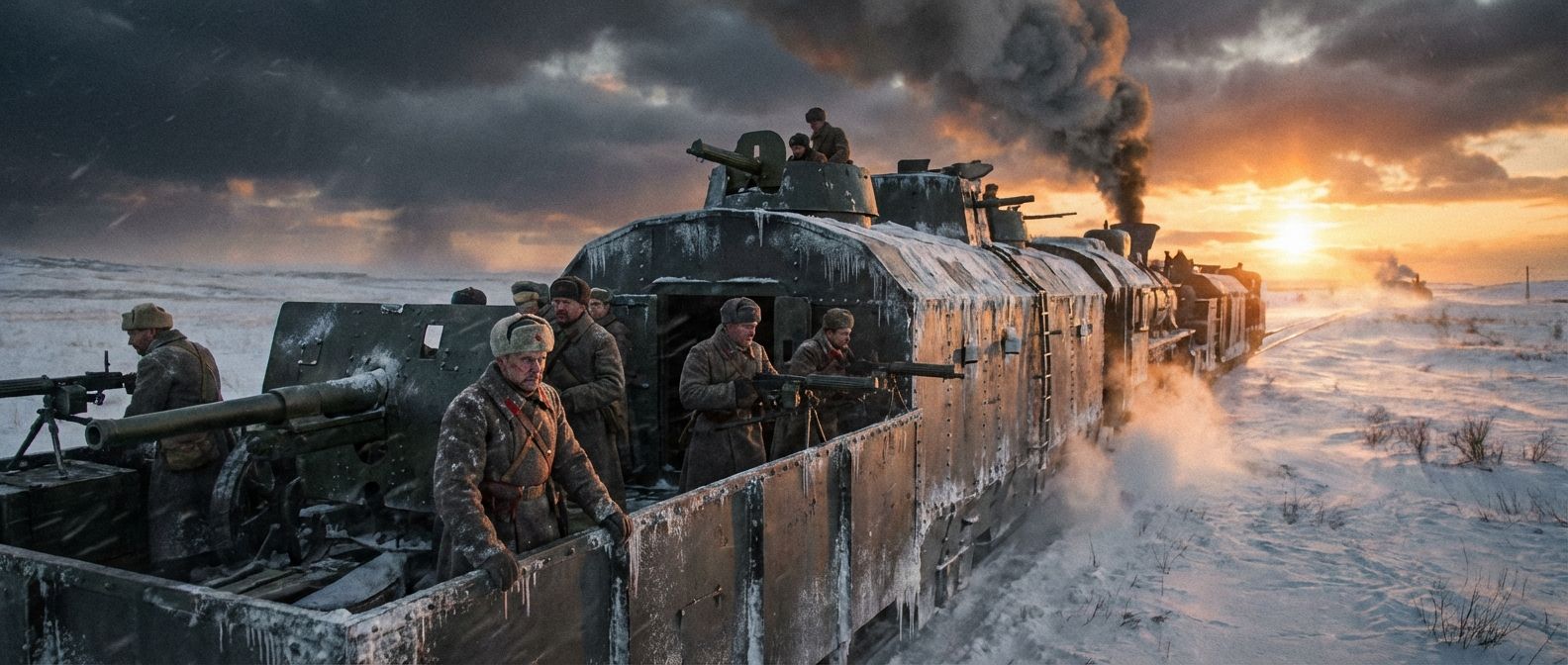
A dramatic, wide-angle photograph of a powerful, imposing armored train from the Russian Civil War, speeding through a desolate, snow-covered Russian landscape. A few determined Red Army soldiers are visible on deck, their faces weathered. The scene captures the harshness and intensity of the conflict, with dramatic lighting.

GCSE History: The Bolsheviks in power, 1917–24

This deck covers the consolidation of Bolshevik rule under Lenin. It details the early decrees, the dissolution of the Constituent Assembly, and the Treaty of Brest-Litovsk. It then examines the causes, events, and outcome of the Russian Civil War, analysing the reasons for the Red victory. The deck also covers the moves towards a one-party state, including the Red Terror and the Kronstadt Mutiny, and concludes with the economic policies of War Communism and the New Economic Policy (NEP), and early social changes.
StudyStudy From HereDetails
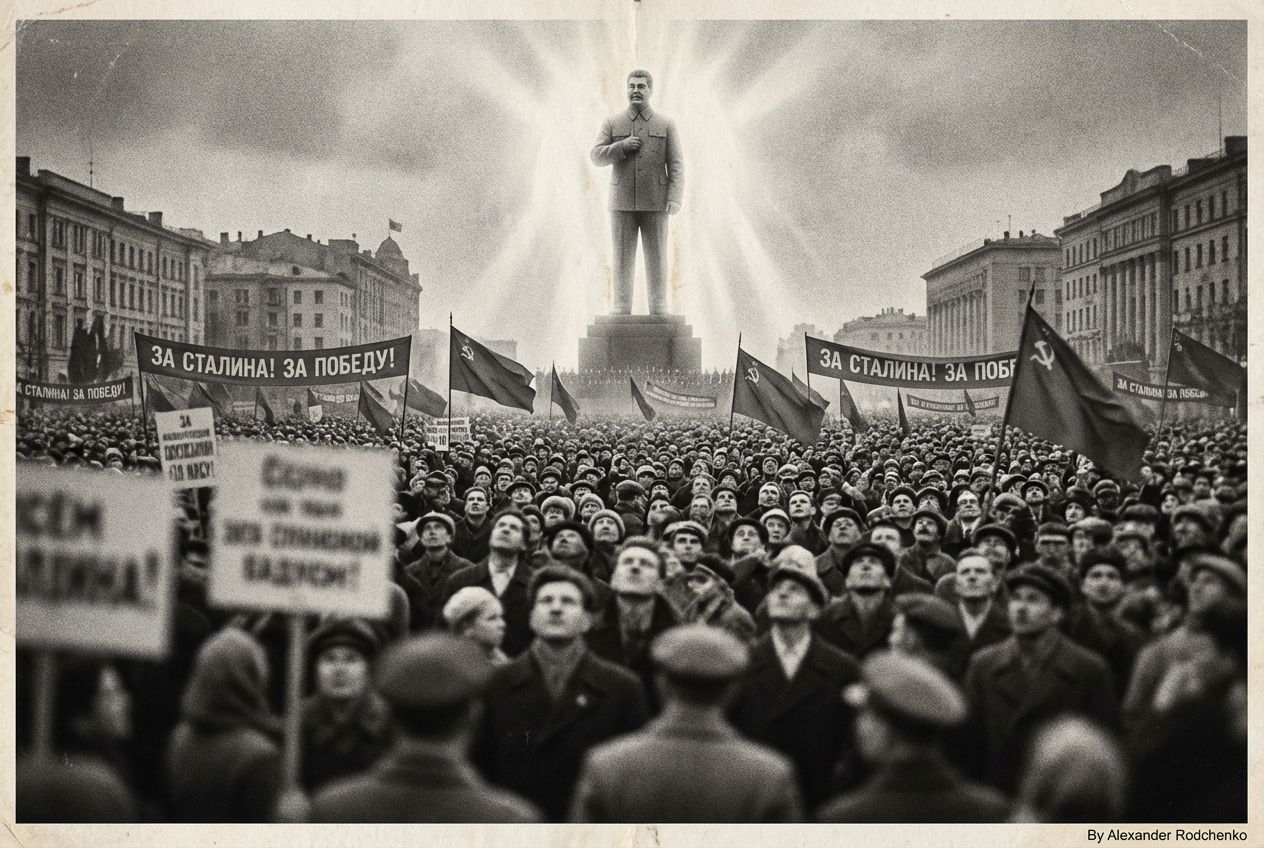
A black and white photograph in the style of Soviet propaganda art, showing a massive crowd with banners and flags, all focused on a single, towering figure of Joseph Stalin in the distance, bathed in light. The foreground is slightly out of focus to emphasize the scale and power dynamic.

GCSE History: Stalin’s rise to power and dictatorship, 1924–41

This deck covers Joseph Stalin's rise to become the undisputed leader of the USSR and the nature of his dictatorship. It details the power struggle after Lenin's death, the mechanisms of control in the 1930s including the purges and show trials, and the use of propaganda to create the Cult of Stalin.
StudyStudy From HereDetails
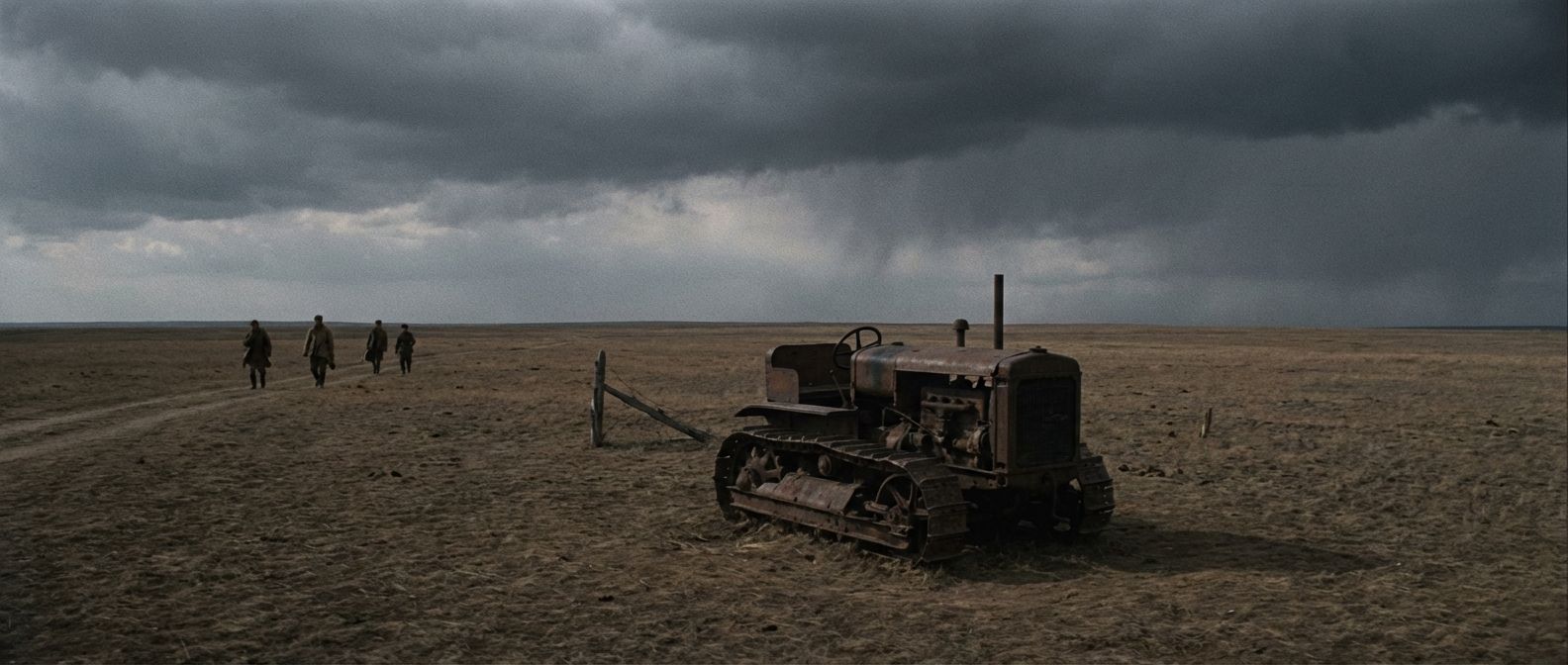
A wide, cinematic photograph of an early Soviet tractor, abandoned in a vast, barren field under a dramatic, foreboding sky, in the 1930s Russian countryside. The landscape should feel desolate and expansive, with a few distant, silhouetted figures of peasants walking away, conveying the hardship, famine, and human cost of collectivisation. The scene is bathed in a cold, stark light.

GCSE History: Economic and social changes, 1924–41

This deck covers the transformation of the Soviet economy and society under Stalin. It examines collectivisation, the Five-Year Plans, and the impact of these changes on daily life for ordinary Soviet citizens, including women and ethnic minorities.

StudyStudy From HereDetails

Learn GCSE History (Edexcel): Russia and the Soviet Union, 1917–41 differently

Auracle is an audio-first learning platform built for busy people. Memorize anything without looking at a screen.

Hands-Free Learning

Listen, interact, and review cards entirely through audio. Perfect for commuting, walking, or at the gym.

Spaced Repetition

Auracle uses a scientific algorithm to schedule your reviews at the optimal time, ensuring you never forget what you learn.

Learn how it works

Ready to start the GCSE History (Edexcel): Russia and the Soviet Union, 1917–41 audio course?