Auracle
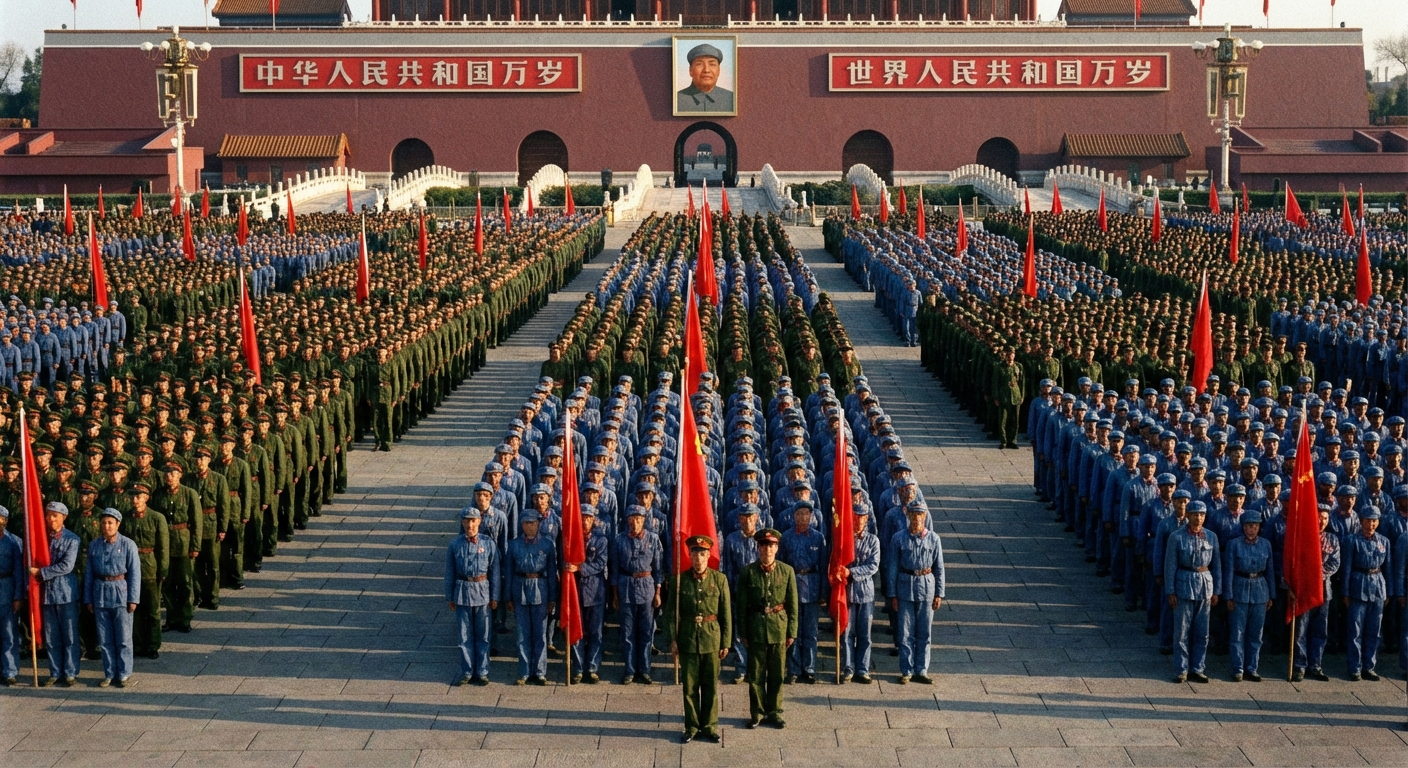
A sweeping, dramatic photograph of a vast, disciplined crowd of Chinese people, including peasants and soldiers, gathered in an iconic square, stretching into the distance under a monumental portrait of Mao Zedong. The scene conveys a sense of overwhelming unity, order, and the dawn of a new, powerful era, with stark, dramatic lighting.
CoursePublicCreated 26/03/2026

GCSE History (Edexcel): Mao’s China, 1945–76

All the key facts, dates, and policies for your Edexcel GCSE History paper on Mao’s China, 1945–76.

Total Decks
4
Course Completion
0%
0/4 Decks
Answer Language
en-GB
Course Completion
0%
0/4 Decks

Decks in this Course

4 items
A sweeping, dramatic photograph of a vast, disciplined crowd of Chinese people, including peasants and soldiers, gathered in an iconic square, stretching into the distance under a monumental portrait of Mao Zedong. The scene conveys a sense of overwhelming unity, order, and the dawn of a new, powerful era, with stark, dramatic lighting.

GCSE History: Mao's China - Establishing communist rule, 1945–59

This deck covers the Chinese Civil War (1945-49), including the strengths and weaknesses of the CCP and Guomindang and the reasons for the CCP's victory. It then covers the establishment of communist rule, including Mao's ideology and role, the structure of the CCP government, the consolidation of power through terror and the 'three antis' and 'five antis' movements, and finally, the Hundred Flowers campaign and the subsequent Anti-Rightist purge.
StudyStudy From HereDetails
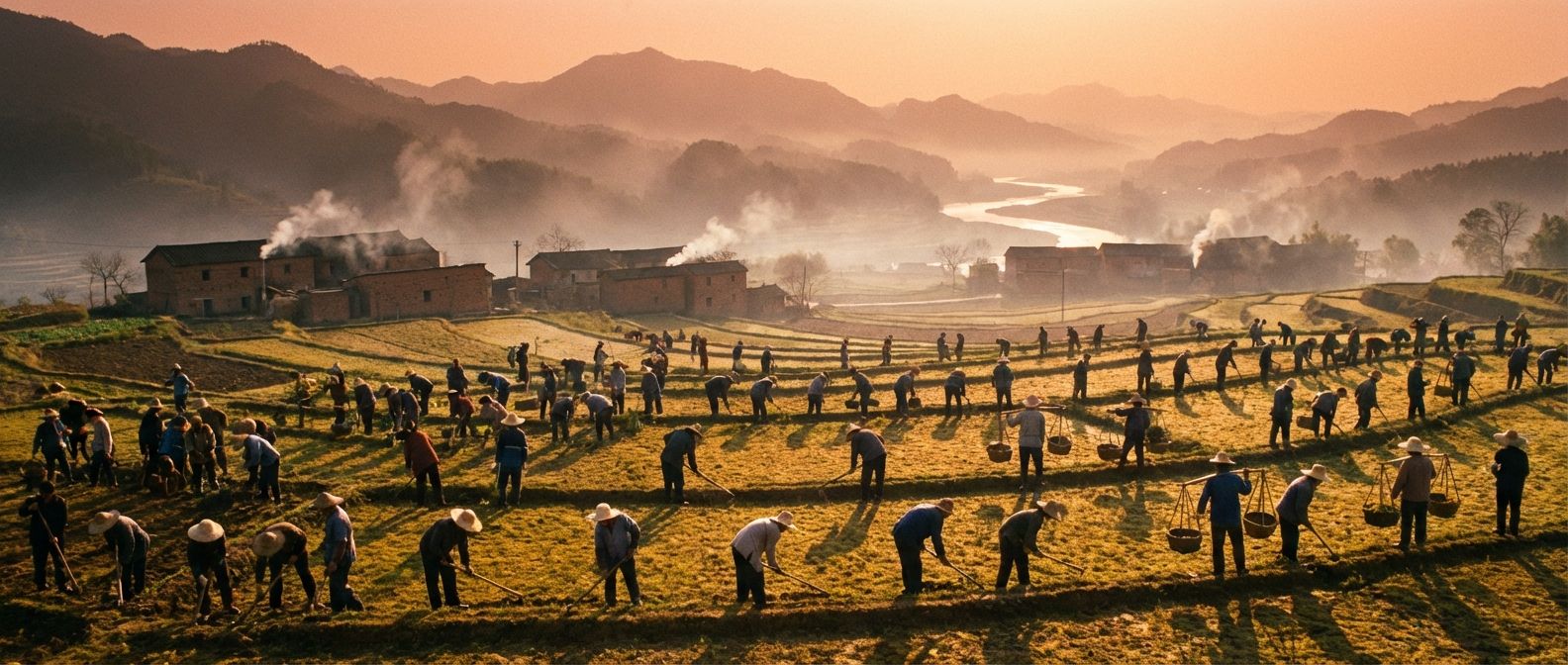
A wide, dramatic photograph of an expansive rural Chinese landscape at dawn. In the foreground, a large group of Chinese peasants, men and women, are working together in a vast field, some with traditional tools, others carrying materials, conveying a sense of immense collective effort and mass mobilization. In the mid-ground, faint smoke rises from what appears to be small, rudimentary industrial structures or collective workshops, hinting at the ambitious push for local industry alongside agriculture. The golden light of the rising sun casts long shadows across the scene.

GCSE History: Mao's China - Economic policy, 1949–65

This deck covers Mao's economic policies from 1949 to 1965. It details early agricultural changes like land redistribution and collectivisation, the first Five-Year Plan for industry, the Great Leap Forward (1958-62), and the period of economic reform under Liu Shaoqi and Deng Xiaoping from 1962 to 1965.
StudyStudy From HereDetails
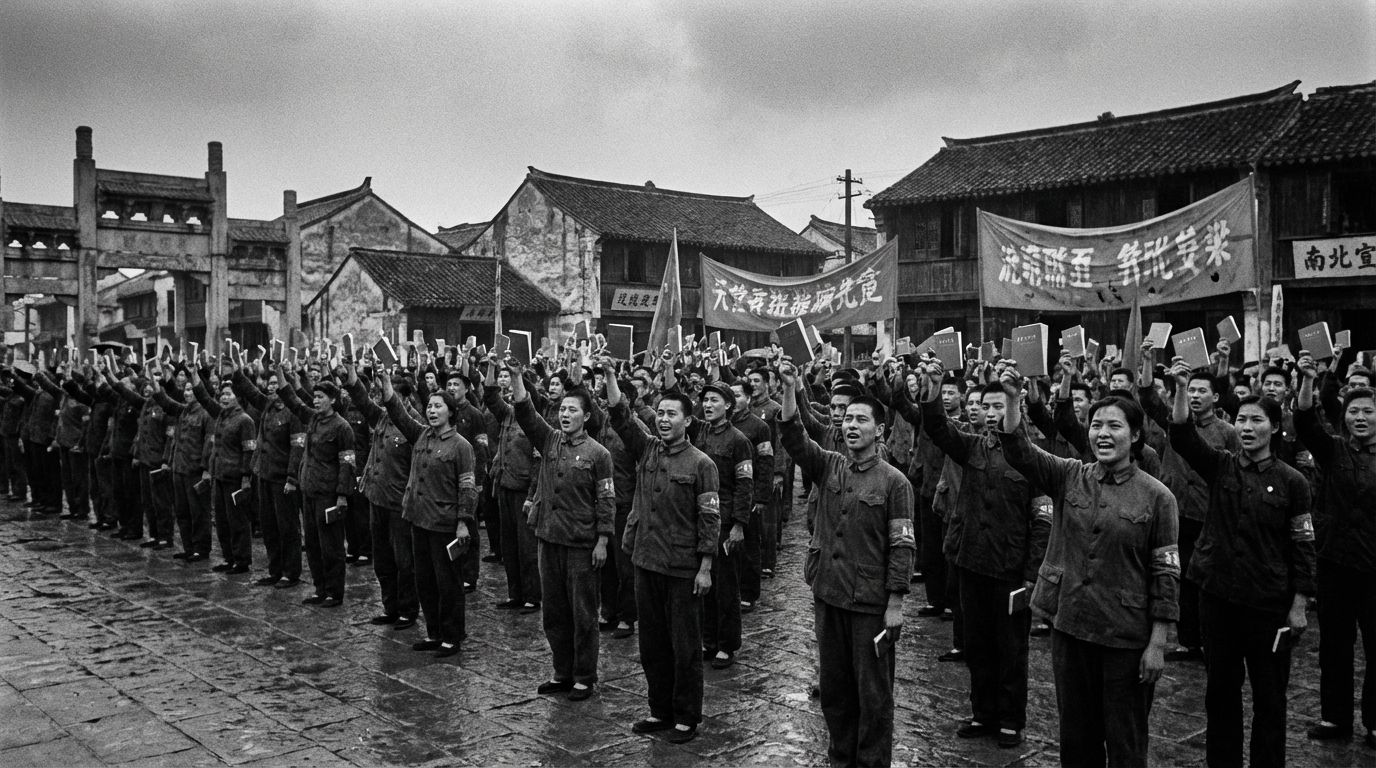
A dramatic wide-angle photograph of a vast throng of young Red Guards, dressed in simple uniforms and armbands, passionately waving their 'Little Red Books' in a bustling Chinese city square during the 1960s. The scene conveys intense fervor and collective movement, with traditional Chinese architecture subtly visible in the background under a dramatic, overcast sky.

GCSE History: Mao's China - The Cultural Revolution and its aftermath, 1966–76

This deck covers the causes, events, and consequences of the Cultural Revolution in China (1966-76). It explores the power struggles within the CCP, the role of the Red Guards, the effects on Chinese society, and the key figures who shaped this turbulent period, including Mao, Lin Biao, and the Gang of Four.
StudyStudy From HereDetails
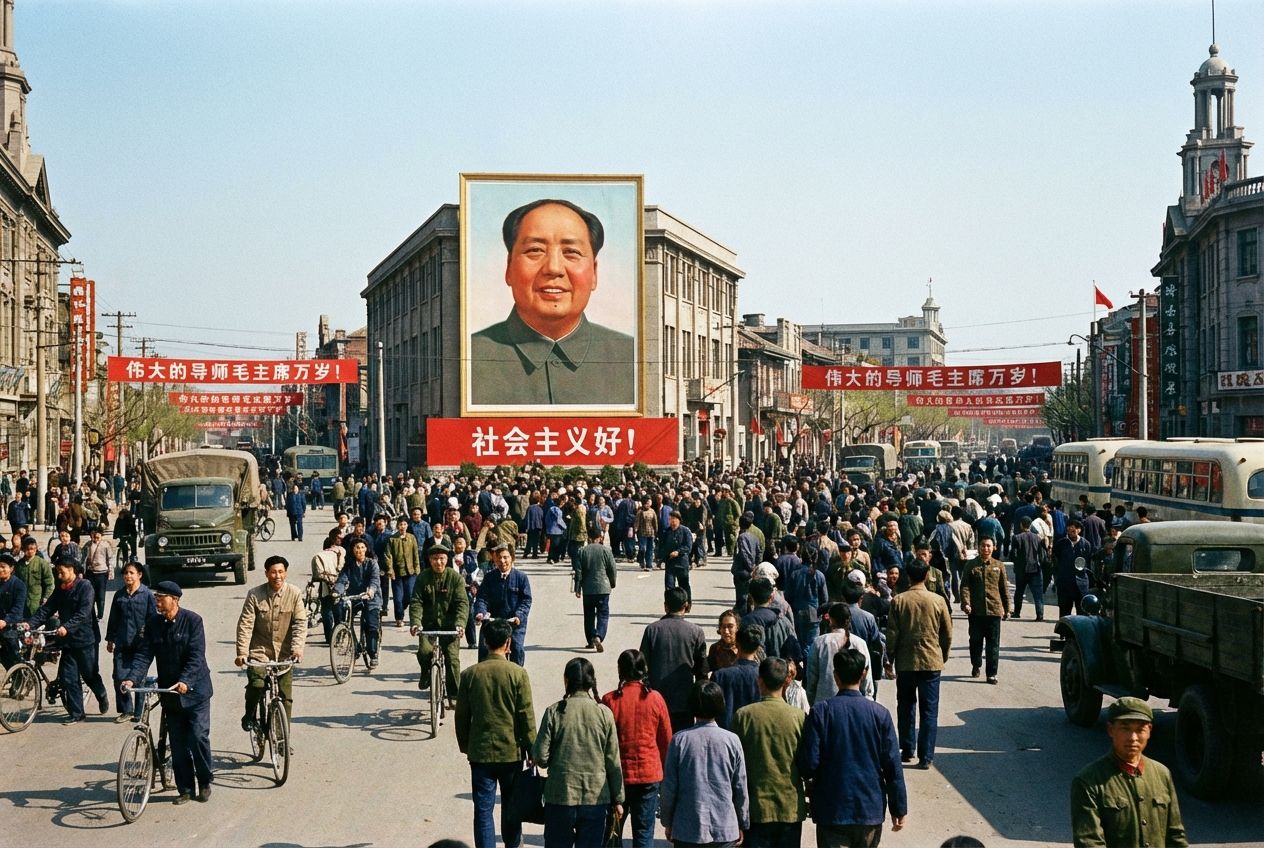
A dramatic, wide-angle photograph capturing a bustling street scene in 1960s China, dominated by a colossal, vibrant propaganda poster of Mao Zedong, his image looking over the people. Below, individuals in period attire, some on bicycles, move through the busy public space under a clear, bright sky, composed for a 3:2 horizontal frame.

GCSE History: Mao's China - Life in Mao’s China, 1949–76

This deck explores life for ordinary people in Mao's China from 1949 to 1976. It covers the methods of communist control, such as propaganda and the 'cult of Mao', and examines the profound changes to family life, women's rights, education, healthcare, and culture under CCP rule. This knowledge is essential for understanding the social impact of the communist revolution and for answering questions on this topic in your GCSE History exam.

StudyStudy From HereDetails

Learn GCSE History (Edexcel): Mao’s China, 1945–76 differently

Auracle is an audio-first learning platform built for busy people. Memorize anything without looking at a screen.

Hands-Free Learning

Listen, interact, and review cards entirely through audio. Perfect for commuting, walking, or at the gym.

Spaced Repetition

Auracle uses a scientific algorithm to schedule your reviews at the optimal time, ensuring you never forget what you learn.

Learn how it works

Ready to start the GCSE History (Edexcel): Mao’s China, 1945–76 audio course?