Auracle
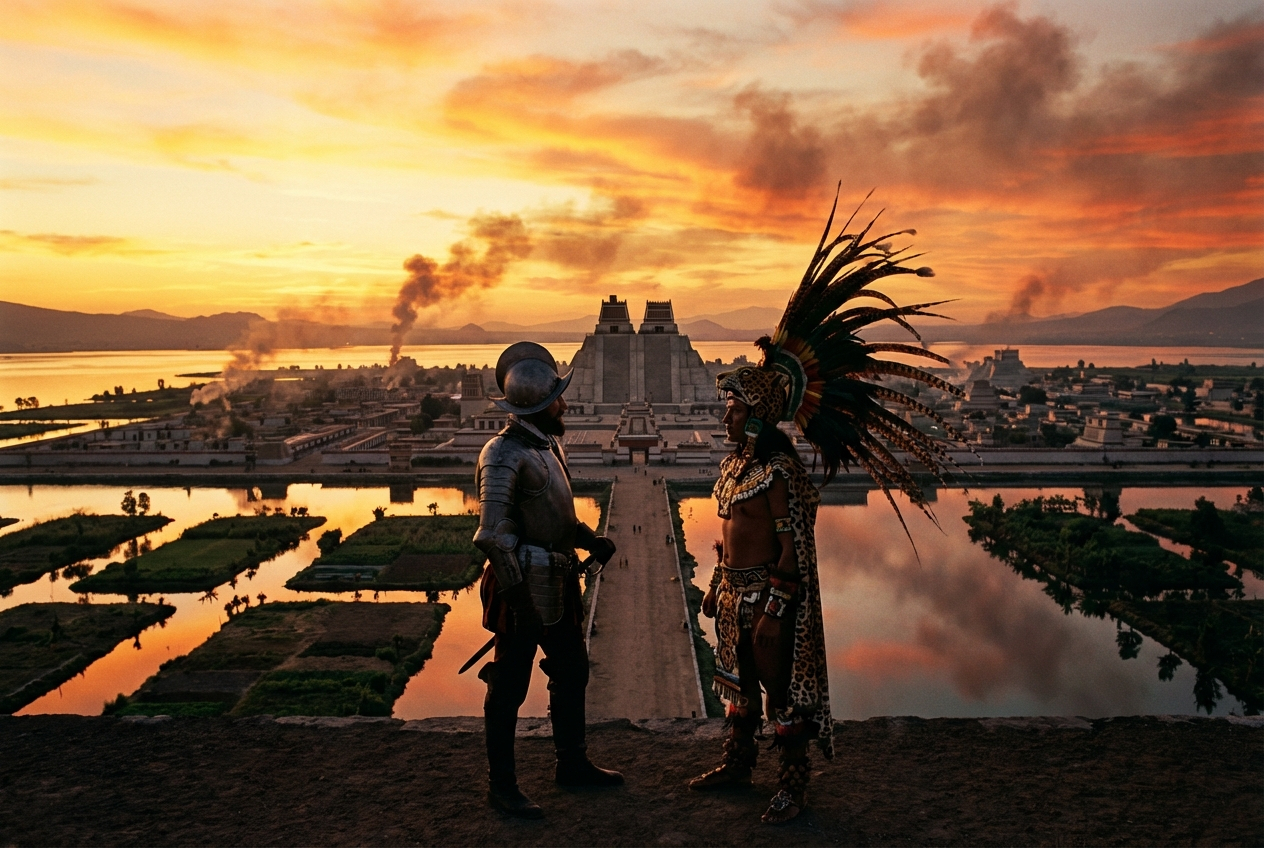
A dramatic, wide-angle photograph capturing the awe-inspiring scale of Tenochtitlan, the Aztec capital, with its towering temples and intricate floating gardens, under a dramatic, golden dawn sky. In the foreground, a Spanish conquistador in shining armor stands on a causeway, facing an Aztec noble adorned with vibrant feathers, their forms silhouetted against the magnificent city, evoking a powerful encounter and clash of civilizations in a 3:2 landscape.
CoursePublicCreated 26/03/2026

GCSE History (Edexcel): Spain and the ‘New World’, c1490–c1555

All the key names, dates, and events for your Edexcel GCSE History exam on Spain and the ‘New World’, c1490–c1555.

Total Decks
3
Course Completion
0%
0/3 Decks
Answer Language
en-GB
Course Completion
0%
0/3 Decks

Decks in this Course

3 items
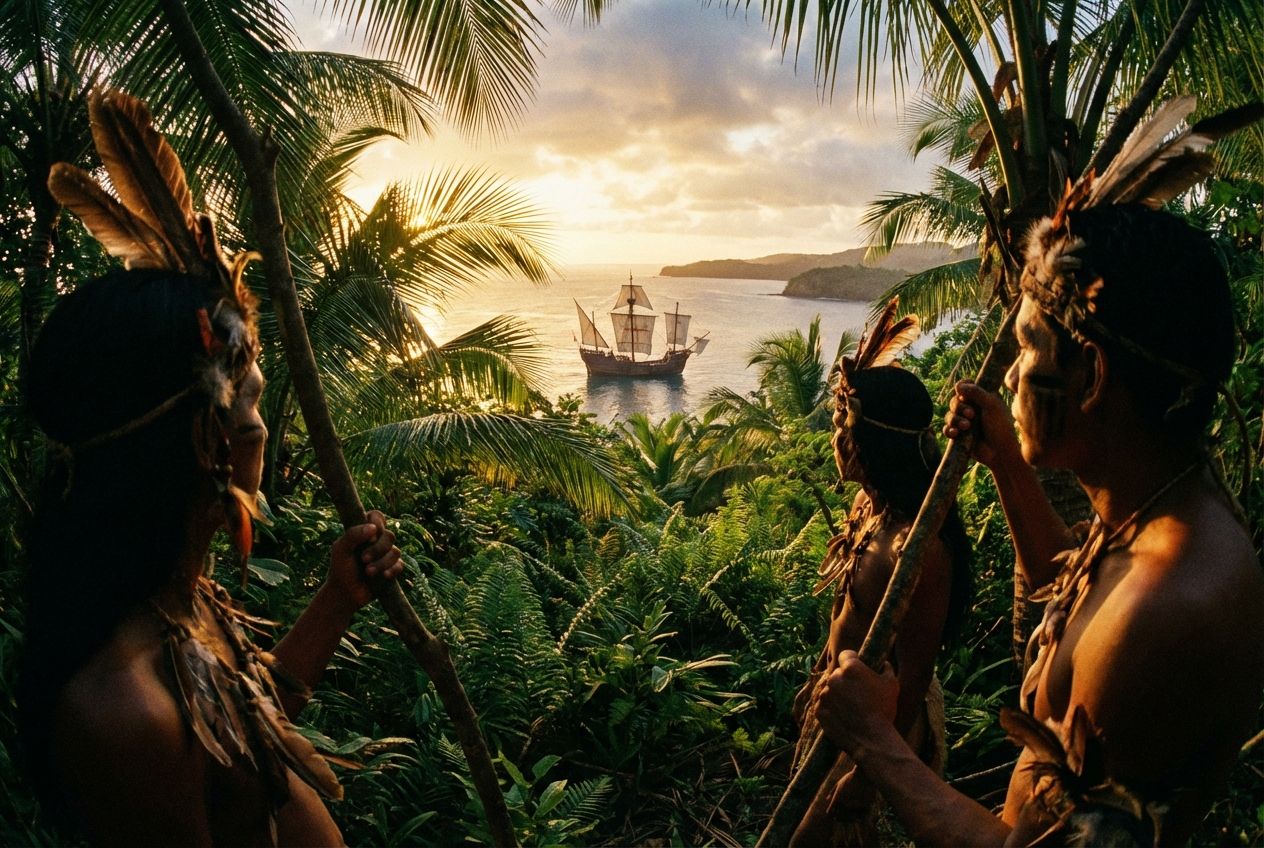
A dramatic wide-angle photograph from the perspective of indigenous Taino people, hidden amongst the dense, tropical foliage of a pristine Caribbean island. In the distance, a 15th-century Spanish caravel sails slowly towards the shore under a dramatic, golden dawn sky. The scene captures a moment of quiet observation and the dawn of a new era, composed for a 3:2 landscape frame.

GCSE History: Spain reaches the Americas, c1490–1512

This deck covers the initial phase of Spanish exploration as required by the Pearson Edexcel specification. It focuses on the motivations for exploration, including Spain's 'crusading spirit' and Queen Isabella's role; Columbus's first voyage in 1492; the initial contact with Indigenous peoples (Tainos and Caribs); the rivalry with Portugal leading to the Treaty of Tordesillas; and the establishment of the first Spanish settlements and imperial policies in the Caribbean up to 1512.
StudyStudy From HereDetails
A dramatic, wide-angle photograph capturing the awe-inspiring scale of Tenochtitlan, the Aztec capital, with its towering temples and intricate floating gardens, under a dramatic, golden dawn sky. In the foreground, a Spanish conquistador in shining armor stands on a causeway, facing an Aztec noble adorned with vibrant feathers, their forms silhouetted against the magnificent city, evoking a powerful encounter and clash of civilizations in a 3:2 landscape.

GCSE History: The conquistadors, 1513–c1528

This deck covers the expansion of the Spanish Empire by the conquistadors, focusing on Balboa, Magellan, and the conquest of the Aztec Empire by Cortes. It details key events, individuals, and the consequences for the Aztec civilisation, as required by the Pearson Edexcel GCSE History specification.
StudyStudy From HereDetails
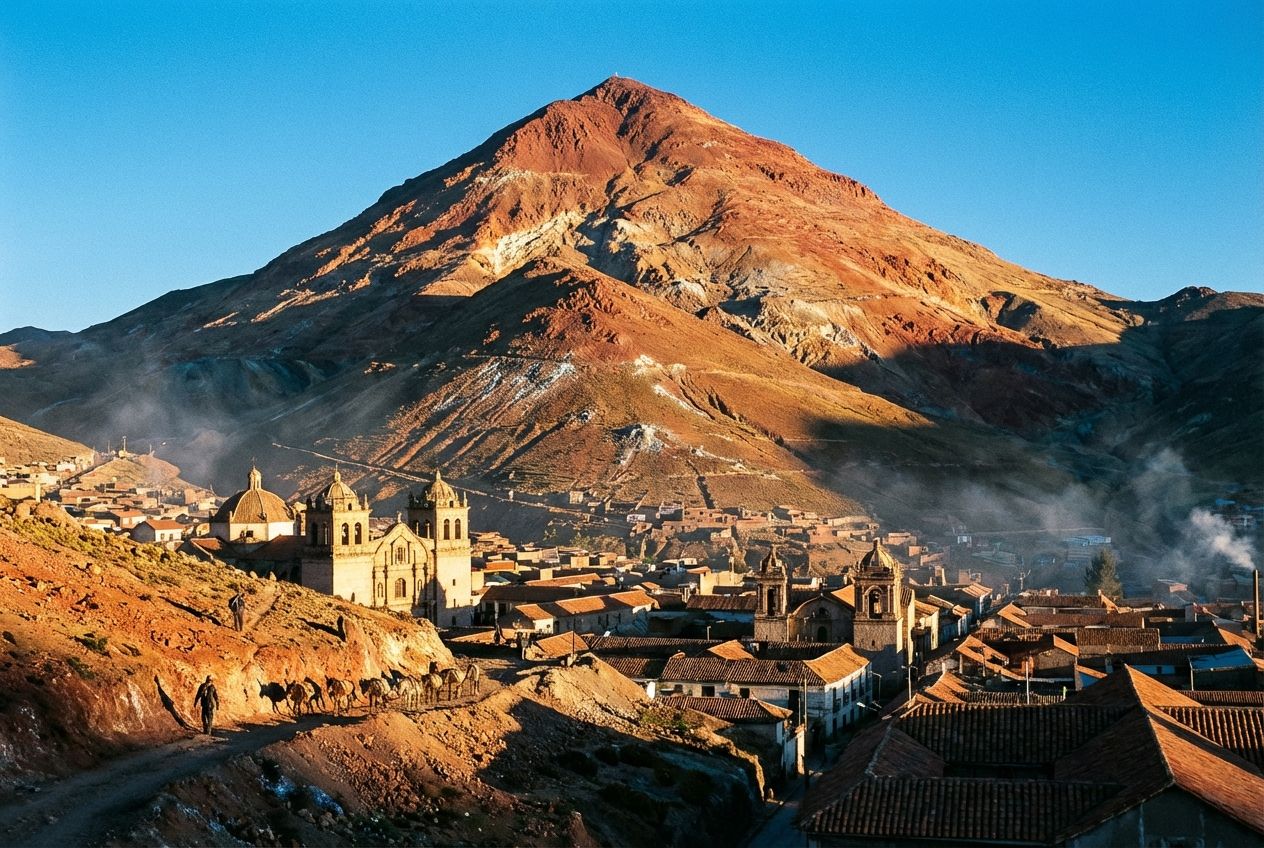
A dramatic wide-angle photograph of the Cerro Rico mountain in Potosí, Bolivia, at sunrise, casting long shadows over the historic colonial city nestled at its base. The mountain slopes subtly reveal the sparkle of exposed silver ore, symbolizing the immense wealth and economic foundation of the Spanish Empire. The scene is vivid and majestic, composed for a 3:2 landscape frame.

GCSE History: The Spanish Empire c1528–c1555

This deck covers the consolidation of the Spanish Empire from c1528 to c1555. It details Pizarro's conquest of the Incas, the establishment of imperial governance, the debate over the treatment of Indigenous peoples led by Las Casas, and the economic impact of the New World on Spain.

StudyStudy From HereDetails

Learn GCSE History (Edexcel): Spain and the ‘New World’, c1490–c1555 differently

Auracle is an audio-first learning platform built for busy people. Memorize anything without looking at a screen.

Hands-Free Learning

Listen, interact, and review cards entirely through audio. Perfect for commuting, walking, or at the gym.

Spaced Repetition

Auracle uses a scientific algorithm to schedule your reviews at the optimal time, ensuring you never forget what you learn.

Learn how it works

Ready to start the GCSE History (Edexcel): Spain and the ‘New World’, c1490–c1555 audio course?